


Téléchargez l'application et débloquez gratuitement les meilleurs spots pour the wrasse fish !
Télécharger l'applicationThe Wrasse fish
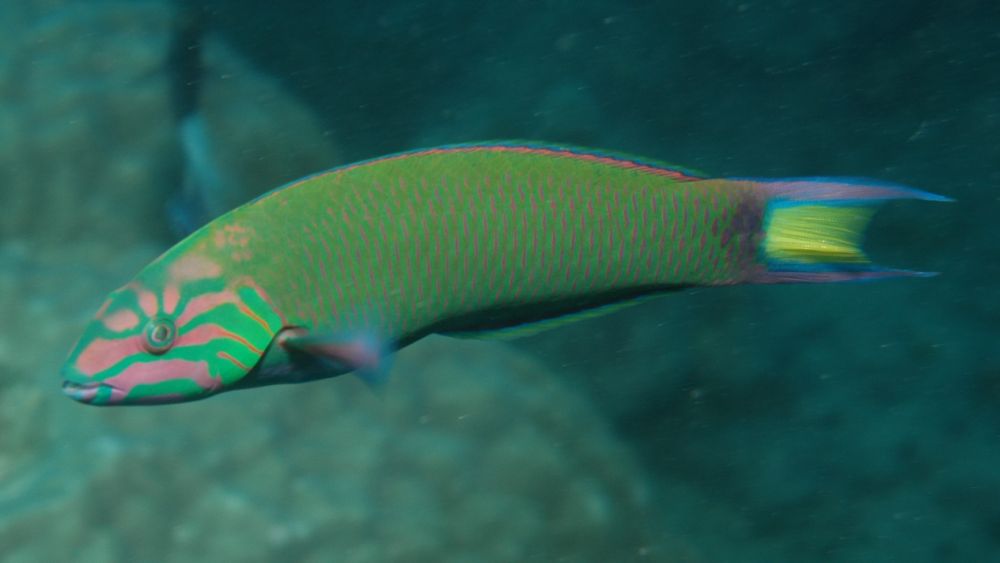
Varies according to the species
Varies according to the species
Avez-vous pêché
cette espèce ce mois-ci ?
The Wrasse fish belongs to the Labridae family. Labridaes are marine fish, the Wrasse of the Labridae family, in the order of Perciformes. The family is large and diverse, with about 500 species of fish generally very colourful, grouped into 60 genera.
The large number of species of wrasse offers an incredible diversity of colors, shapes and sizes with possible geographical variations between some individuals of the same species. In addition, like parrot fish, many livers evolve over the course of their lives according to their maturity and their position within the group. These evolutions can be considered in different phases (juvenile, intermediate or initial and terminal) at each of them, morphological modifications (size, shape and color) take place. All these variations in livery during the existence of a wrasse make it particularly difficult to identify between species, the risk of confusion is great and this even for specialists. During the juvenile phase, the dominant colors can vary from bright yellow to orange, as well as dull colors such as grey and brown with camouflage patterns. In the intermediate or initial phase, the wrasse is both male and female, adult but subordinate to the dominant individuals and therefore smaller with dull colors and cryptic patterns. However, in the terminal phase, depending on the species, fish can change sex, size and livery. The latter becomes a distinctive visual element within the group and is very colorful with red, yellow, gree
The Wrasse fish lifestyle
All Labridae have a daytime activity.
The majority of species, carnivores, search for small animals by digging the bottom and rock walls, but others are planktonivores. Depending on the species, wolves can be carnivorous, omnivorous or herbivorous, and their menus can include fish, mollusks, worms, crustaceans, corals, echinoderms, plankton or different types of underwater vegetation.
As far as reproduction is concerned, there are several scenarios, the most frequent of which are as follows:
The first case is related to a sexual metamorphosis involving a number of species that practice successive protogynous hermaphroditism. This means that juvenile individuals are first females (called the initial stage) at sexual maturity and then males (the terminal stage). The opposite also exists in some species, although rarer, in this case the successive hermaphroditism will be of the protander type.
The second case is more conventional, mature adults (early stage) are sexually determined, they are male or female with a similar livery. Only the dominant male in the group is in terminal stage with a shimmering livery.
The group is therefore a harem with always a dominant male in the terminal stage who has the privilege of being able to reproduce with the females in the group, this male defends a territory. Upon his death, it will be replaced by an individual in the initial stage belonging to the community, so it will be either a male or a female, depending on the species
The Wrasse fish habitat
Wrasses occupy all the tropical and subtropical seas of the globe from the Atlantic Ocean to the Pacific Ocean via the Indian Ocean and are also present in temperate seas. In general, wrasses can be found in shallow waters near the coast or on a reef not far from the bottom.
Toute l'info pêche autour de vous
Spots, Prises, sorties, prévisions météo, concours...
sur l'appli ComptoirDesPêcheurs !



The Wrasse fish angling
To fish for the wrasse, we usually prefer the use of a fine biker, bait with a worm. Natural bait is often used. Also, the wrasse is fished during the day, as it leaves its refuge to feed during the day. It is also quite suspicious, so it is important to avoid making too much noise. For fishing techniques, you can use rock fishing, float fishing, rock fishing with artificial worms or fishing to support a boat.
The wrasse is classified as a vulnerable species in the Red List of the International Union for Conservation of Nature. It is therefore necessary to check with your region to find out if fishing is allowed.
On a testé pour vous !

Suivi de l'activité de pêche récréative en France
Depuis 2020, une étude approfondie sur la pêche récréative en mer a été initiée en France avec une nouvelle approche innovante. Cette démarche implique directement les pêcheurs récréatifs, afin de collecter...
FIIISH BLASTER SHAD, un leurre innovant pour la pêche du brochet !
Après 5 années de recherche et de développement, Fiiish, la marque du célébrissime Black Minnow, a lancé un leurre ultra-innovant équipé du Player Concept, un système très ingénieux permettant de pouvoir...
Leurre Black Minnow : une décennie et pas une ride !
Déjà 10 ans que la société bretonne Fiiish a lancé dans le commerce le leurre souple Black Minnow et bien lui en a pris pour le plus grand bonheur des pêcheurs....
La Salmo Trek : le rendez-vous pêche incontournable de cet été !
Envie de relever un nouveau défi de pêche dans un lieu magnifique ? ...
Nouvelle appli ComptoirDesPêcheurs : toute la pêche (très bientôt) dans votre poche !
Sur votre smartphone - Android ou Apple - la toute nouvelle version de l'application ComptoirDesPêcheurs va bientôt devenir votre outil indispensable pour toutes vos pêches ! Un véritable "couteau-suisse digital" qui vous...
Nouveau : Caperlan lance un service de commande en ligne pour vos appâts vivants mer & eau douce !
Bonne nouvelle ! Pour continuer à pratiquer votre passion, vous pouvez désormais (en + des produits habituels) commander vos appâts vivants mer & eau douce en ligne et les retirer dans...
On a essayé pour vous le 905 Pilothouse de Quicksilver
Conçu à la fois pour la pêche, l’aventure et le plaisir, en toute sécurité et total confort, le 905 Pilothouse convient pour la croisière en haute mer (catégorie B) avec une...